Build in Public Highlight: Yoanna Juille and the Value of the Messy Middle
A founder's look at Yoanna Juille's candid build-in-public journal, where failed launches, pivots, pricing decisions, and small wins become a useful operating record.
Build in Public Usually Skips the Middle
The clean version of an indie founder story is easy to recognize.
There is an idea, a launch, a graph moving up and to the right, and a short list of lessons written after the outcome is already known. Even when the story is honest, hindsight gives every decision a confidence it did not have at the time.
The harder story to publish is the one unfolding between those milestones: the week when the positioning feels wrong, the launch that produces traffic but no sales, the offer that works but does not lead toward the life the founders want, or the price change that might be smart and might simply be panic.
Yoanna Juille's blog is interesting because it keeps that middle intact.
It follows Yoanna and her co-founder Aymeric as they try to turn Lutains into a sustainable independent business. The archive does not read like a victory lap. It reads like an operating log: failed launches, brand changes, new offers, slow weeks, beta feedback, marketing experiments, and the small moments when an uncertain decision finally produces a signal.
That makes the blog useful for a reason that has little to do with polished advice. It preserves the sequence in which the lessons were actually learned.
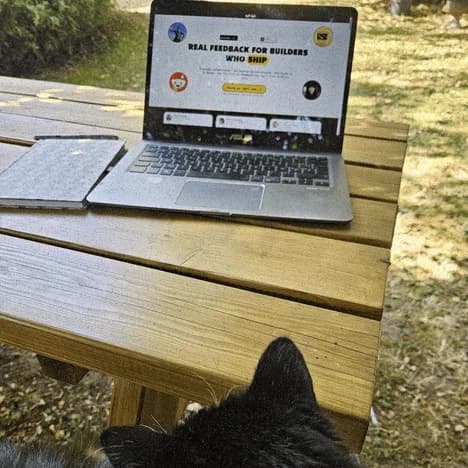
Two Years to an Honest Diagnosis
The clearest starting point is Yoanna's account of realizing that their original SaaS was not valuable enough.
She and Aymeric began with a familiar founder assumption: they could combine development and design, ship a product, and let sales validate the work. Their first major launch produced one sale. A later launch reached the top position on Uneed and brought 73 visits and 10 signups, but no sales.
The easy response would have been to describe those launches as traction and keep polishing the same product. Instead, Yoanna wrote that the tool was essentially a superficial AI wrapper. The problem was not only that they needed more features. They had built something visually appealing without creating enough differentiated value.
That distinction is uncomfortable, which is exactly why it matters.
Many founder updates report the numbers while protecting the original thesis. The traffic was too small. The launch timing was wrong. The audience was not ready. Any of those explanations may be true, but they can also postpone the harder question: if more people arrived tomorrow, would the product be worth paying for?
Lutains changed direction around that question. The product moved away from a generic AI conversation and toward a more structured process: clarify the offer, define differentiation, use current Reddit conversations to ground the ideal customer profile, and turn the research into concrete landing-page work.
The important part is not that every pivot was final. Later entries show the offer changing again. The important part is that the diagnosis became public before the outcome was safe.
The build-in-public lesson: A useful founder story does not only publish the decision. It preserves the evidence, uncertainty, and constraints that made the decision necessary.
An Archive That Shows the Sequence
Read one update and the story can look chaotic. Read the archive in order and a more valuable pattern appears.
In May, the founders wrote about stopping product work to focus on marketing. In July, they documented a near restart: leaving the tech bubble, breaking up with an established brand, reusing existing technology for a new mission, struggling with the volume of public work, and eventually finding a clearer visual direction. In August and September, the entries moved through doubt, a redesigned offer, beta audits, friction reduction, and the mechanics of launching again.
This is what normal product discovery looks like when the edits are not hidden.
A pivot is rarely one cinematic moment. It is a chain of smaller realizations. The founders learn that the current product is weak, but still own useful technology. They find a stronger customer problem, but the first format is too labor-intensive or misaligned with their goals. They get encouraging feedback, but not enough demand. They improve the offer, then discover that price or signup friction is still blocking conversion.
By publishing the chain, Yoanna makes each later decision easier to understand. A reader does not need to accept a retrospective summary. The earlier uncertainty is still there in the archive.
That creates a form of trust that a single polished case study cannot reproduce. Consistency does not mean that the strategy stays consistent. It means the record does.
The First Sale Is Not the Whole Story
The latest entry ends with a satisfying result: five days after a major revamp, Lutains made a sale.
But the useful part of the article is everything around the Stripe notification.
Yoanna reports 19 posts, 514 comments, 20,386 impressions, and 119 new website users over seven days. She calculates the conversion rate, explains that testimonials were added, describes how PostHog exposed abandonment during signup, shows the extra social proof added to that flow, and openly discusses lowering the price from $149 to $99.
That is a much better artifact than “we launched and made a sale.” It turns a small outcome into a set of testable inputs.
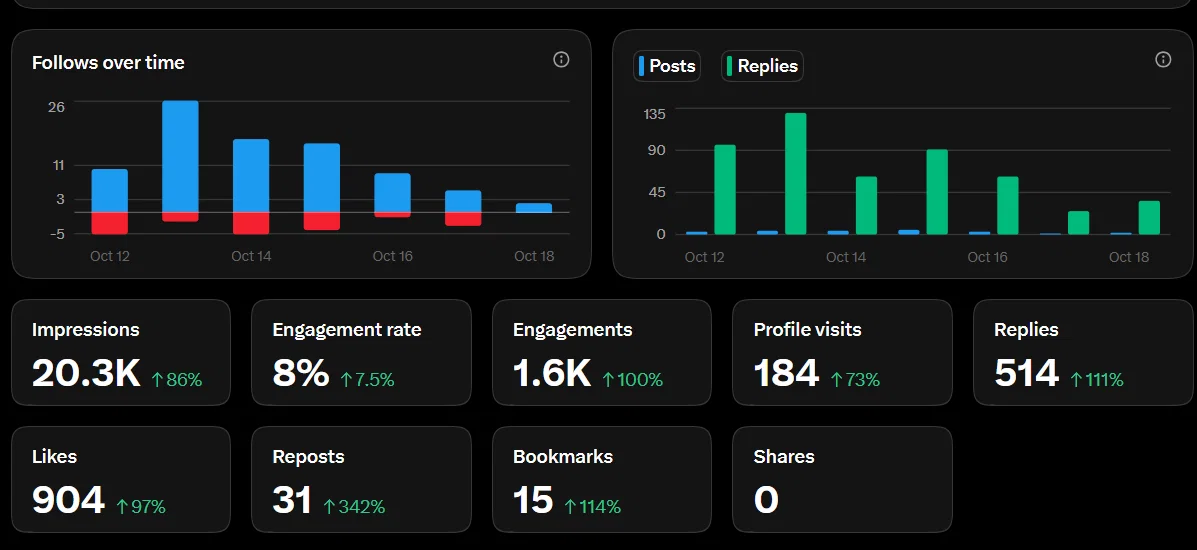
The numbers are not enormous, and Yoanna does not pretend otherwise. That restraint is part of the value. Small numbers are often more actionable for founders than exceptional launch stories because the path between effort and outcome is still visible.
There is also an important distinction between attention and conversion. More social activity brought more visitors, but the team still needed to improve trust, reduce signup friction, and test the price. Distribution did not replace product work. Product work did not replace distribution. The sale arrived after several parts of the system moved together.
Show the Conversion Work
One of the strongest details in the recent update is the signup change.
The founders noticed users abandoning the flow. Their response was not to hide the problem behind a top-line traffic number. They added proof closer to the moment of hesitation: examples of happy customers and evidence that real people had used the service.
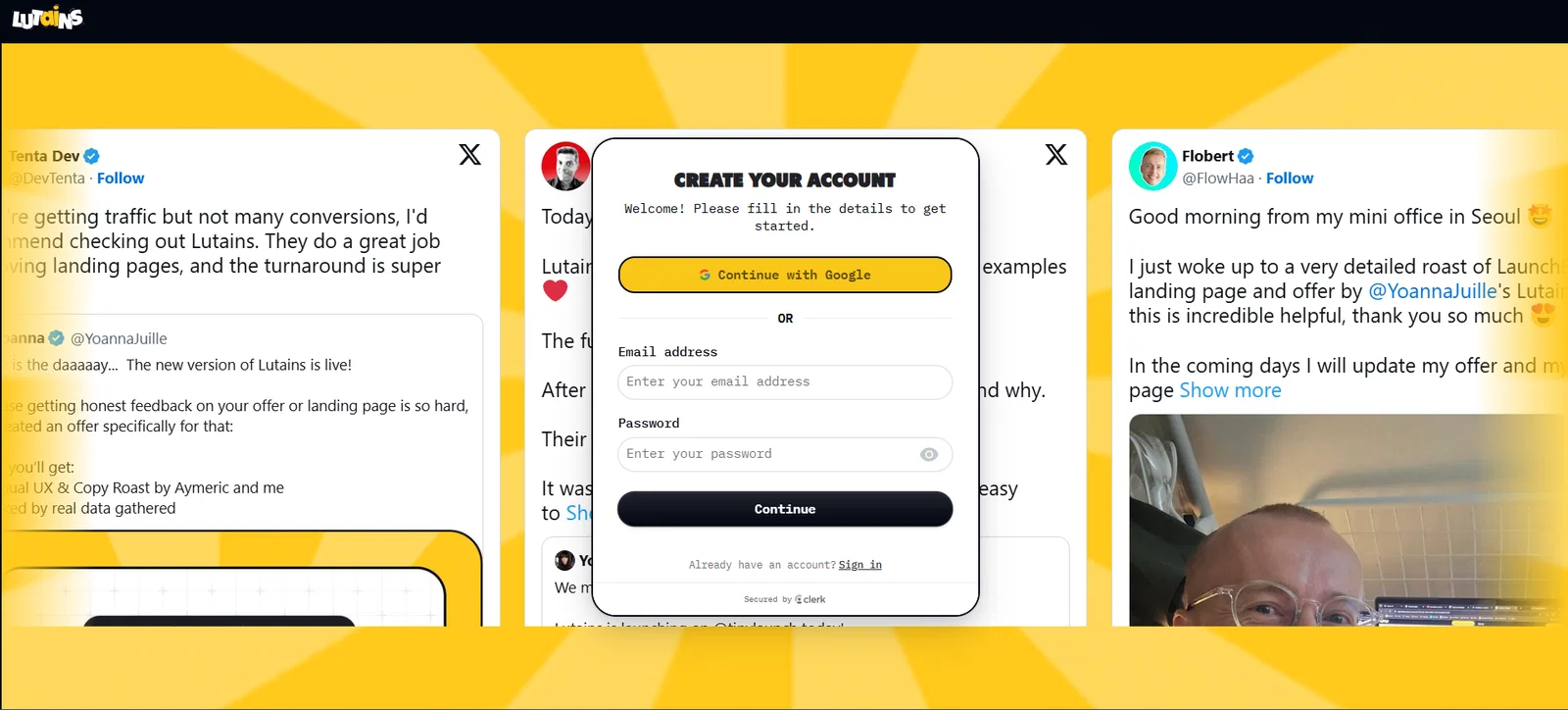
This is a useful reminder that conversion work is often less glamorous than launching. It means looking at where people stop, forming a hypothesis about why, and changing the experience close to that point.
The price experiment followed the same logic. Lowering a price can feel like admitting the original positioning was wrong. It can also be a rational way to reduce risk for early customers, collect more evidence, and increase the price later when the proof is stronger.
Yoanna presents the decision as a decision, not a universal rule. That is the right level of confidence. One sale does not prove the final price. It does provide a stronger signal than debating the price in private.
The Business and the Life Stay Connected
Another reason the journal stands out is that the business is never separated completely from the life it is supposed to create.
Yoanna and Aymeric's stated goal is independence. They are not trying to become serial shippers who release a new product every week. They want to build something durable enough to support freedom, and they have given that goal a deadline: the end of 2026.
That constraint changes how product decisions are evaluated.
An offer can generate revenue and still be the wrong business if delivery consumes every available hour. A feature can impress users and still move the founders deeper into a category they no longer want to serve. A popular launch can look successful while producing no customers. A slower week can create the clarity required for the next useful step.
The journal allows those tensions to remain visible. Posts mention motivation, moving, doubt, pace, and the fear that an offer may not align with the future they want. Those are not distractions from the company story. For a bootstrapped business, they are part of the operating model.
What I Am Taking From Yoanna's Journal
The most valuable thing in Yoanna Juille's build-in-public practice is not radical transparency for its own sake.
It is continuity.
The archive lets a reader watch assumptions meet evidence. It shows that a first sale does not erase earlier failure, that a pivot can reuse old work, that distribution requires repeated participation, and that a conversion problem becomes clearer when it is connected to a specific point in the customer journey.
For founders, this kind of publishing has three compounding benefits:
- It creates an external memory of why decisions were made.
- It gives future customers a way to see the humans, care, and iteration behind the offer.
- It turns isolated weekly results into a story that becomes more useful over time.
There is a risk, of course. Publishing can become another job, and Yoanna has written about feeling overwhelmed by the work across X, LinkedIn, and the blog. The answer is not to narrate every keystroke. It is to capture the decisions and signals that would otherwise disappear.
That is what this journal does well. It does not remove the mess from the founder journey. It gives the mess enough structure to become useful.
Resources and Links
- Official journal: Yoanna Juille — My indie hacker's life
- Latest launch recap: First sale in under a week after a major revamp
- The original product diagnosis: Our SaaS was just a useless AI wrapper
- Product: Lutains
- Creator: Yoanna Juille on X
- Related reading: Tasu highlight, Flowsery highlight, and StayUp highlight
Connect with me
Follow my journey building in public, sharing insights about development, and creating products.