SEO Basics Guide 2025: From Zero to Results in 2 Months with Zero Budget
A practical SEO guide from a developer's perspective. Learn what I applied to grow my DR from zero with no followers and no budget in just 2 months.
Introduction
Over the past few days, I've been sharing my Domain Rating (DR) results on social media, and I've received countless questions about the basics of SEO. Many developers and indie hackers are curious about how I managed to grow from zero to measurable results in just 2 months with zero followers and zero budget.
This guide is my response to all those questions. I want to share what I've learned, what worked, and most importantly, the practical strategies you can implement today to start improving your own SEO.
Already know the SEO fundamentals? Skip to my journey and strategies →
What is SEO and Why Should You Care?
SEO (Search Engine Optimization) is the practice of optimizing your website to rank higher in search engine results. In simple terms, it's about making Google (and other search engines) understand what your site is about and consider it valuable enough to show it to people searching for related topics.
For developers and indie hackers, SEO is crucial because:
- It's free organic traffic - No ads, no paid promotions
- It compounds over time - Your efforts today will keep bringing results months or years from now
- It builds authority - A strong SEO presence makes your projects look more legitimate and trustworthy
Understanding Key SEO Metrics
Domain Rating (DR)
Domain Rating is a metric (popularized by tools like Ahrefs) that measures the strength of a website's backlink profile on a scale from 0 to 100. The higher your DR, the more authoritative your domain appears to search engines.
What influences DR:
- Number of backlinks pointing to your domain
- Quality of those backlinks (DR of the linking domains)
- Relevance of the linking sites to your niche
Pro tip: Ahrefs offers free tools to check your site's DR and backlinks without needing a paid subscription. This is perfect when you're starting with zero budget you can track your progress for free!
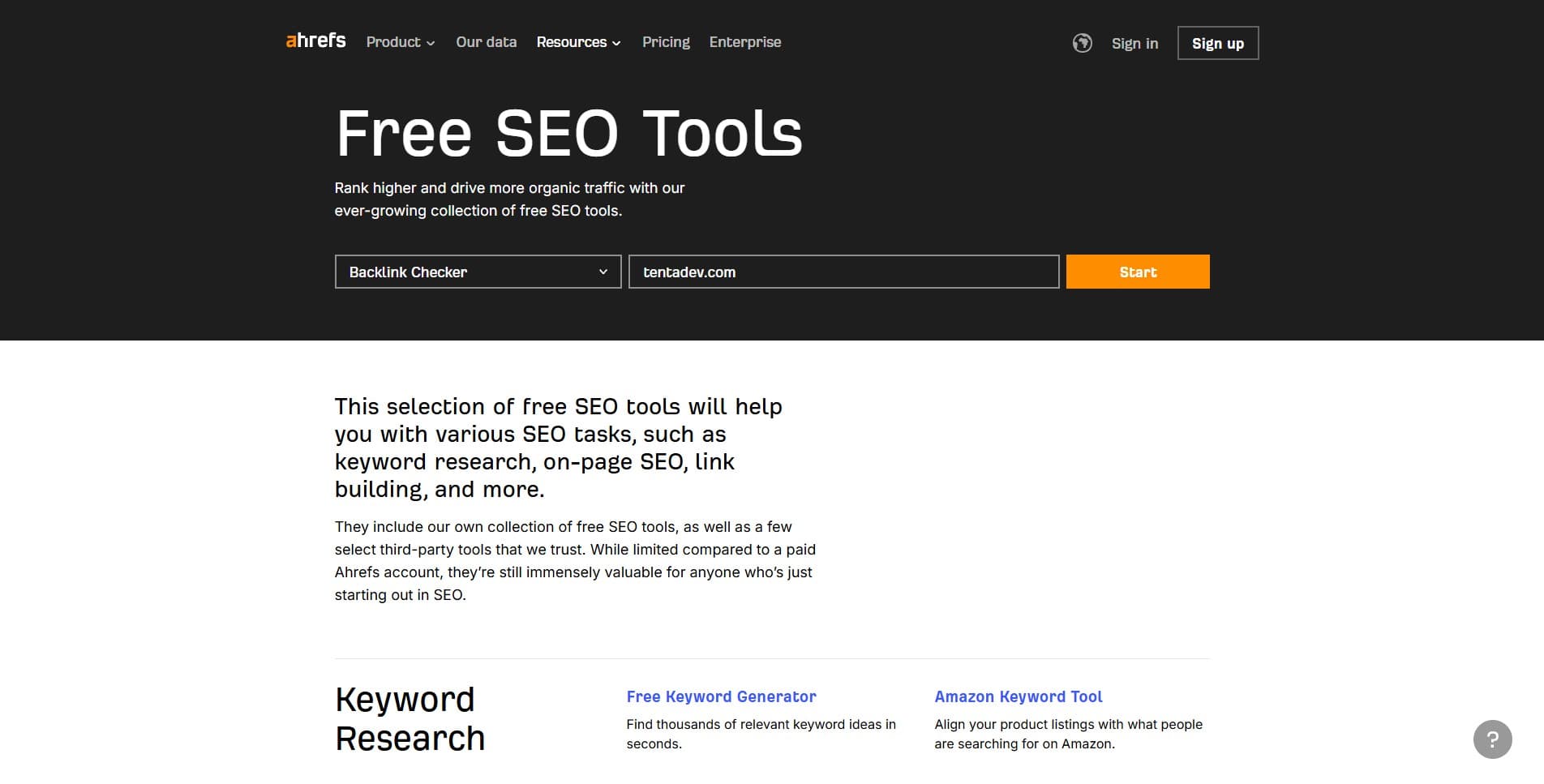
Ahrefs free backlink checker - Track your DR without paying
Backlinks
A backlink is simply a link from another website to yours. Think of backlinks as "votes of confidence" when another site links to you, it's telling search engines: "This content is valuable."
Not all backlinks are equal:
- A backlink from a high-DR site is worth more than one from a low-DR site
- A backlink from a relevant site in your niche is more valuable than a random link
- Backlinks from different domains are better than multiple links from the same domain
My SEO Journey: 2 Months, Zero Budget, Real Results
I started my SEO journey from absolute zero:
- No followers on social media
- No existing backlinks
- No budget for tools or ads
- Just my code editor and determination
What I learned quickly is that there are no magic solutions. SEO is a long game. Results don't come overnight, but they do come if you're consistent and strategic.

My DR growth from 0 to 29 in just 2 months with zero budget
Programmatic SEO: The Foundation
Before you even think about backlinks, you need to get the basics right. Here's what I implemented on this very portfolio site, and what you should implement on yours:
1. Sitemap Configuration
A sitemap tells search engines which pages exist on your site and how they're organized. Here's what I implemented:
// Dynamic sitemap that automatically includes:
// - All static pages (home, blog, projects, reading)
// - All blog posts with their publication dates
// - All project pages with their update dates
// - Proper priorities and change frequencies
Why this matters: Search engines can discover and index all your content automatically. When you add a new blog post or project, it's immediately included in your sitemap.
Want to see it in action? Check out the live sitemap of this site at tentadev.com/sitemap.xml
CRITICAL STEP: Once you have your sitemap, submit it to Google Search Console. This is super important—it tells Google exactly where to find all your pages and helps you track indexing status, search performance, and potential issues. Without submitting your sitemap to GSC, you're leaving Google to discover your content on its own, which takes much longer.
2. Robots.txt Configuration
The robots.txt file tells search engines which parts of your site they can crawl:
// Allow all search engines to crawl everything
// Except private routes and API endpoints
// Include sitemap URL for easy discovery
Why this matters: You're explicitly telling Google "yes, please index my content" while protecting sensitive routes.
3. Metadata and Keywords
Every page on my site has:
- Title tags optimized for search queries
- Meta descriptions that encourage clicks
- Keywords array with 20+ relevant search terms
- Open Graph tags for social media sharing
- Structured data for rich snippets
Why this matters: This is how search engines understand what your page is about and how it should appear in search results.
4. Performance Optimization
Using Next.js gives me:
- Server-side rendering for instant first paint
- Image optimization with next/image
- Static generation for blog posts
- Fast page loads which Google loves
Why this matters: Page speed is a ranking factor. Slow sites rank lower.
Content Strategy: Write What Matters
Here's a crucial lesson I learned: writing relevant blog posts about your domain is essential.
I started seeing real results after I published my SEOSolved review. Why? Because:
- It was specific - A real review of a real product
- It was relevant - About SEO tools, for an audience interested in SEO
- It was valuable - Honest insights from actual testing
- It created connections - The tool creator liked my review
That single blog post did more for my DR than anything else because it created authentic, relevant connections in a niche.
My Content Rules:
- Write about tools, technologies, and topics related to your projects
- Be specific and detailed, not generic
- Share real experiences and results
- Add value to the reader, not just keywords
The Backlinks Strategy That Actually Works
After two months of experimentation, here's what I've learned about building backlinks:
Quality Over Quantity
One backlink from a relevant, high-DR site is worth more than 100 backlinks from spam directories. Focus on earning links from:
- Sites in your niche or industry
- Projects or tools you genuinely use
- Developer communities and forums
- Guest posts on relevant blogs
- Niche-specific directories (like startup directories, developer tools listings, etc.)
A note on directories: You can also submit your domain to directories related to your niche. While I believe these aren't as effective as they used to be (since they're overused), they're still worth the effort especially the niche-specific ones. Just don't expect magic results from them alone.
The Portfolio Hub Strategy
This is my secret weapon, and it's available to every developer:
Create a personal domain (like this portfolio) as your central hub.
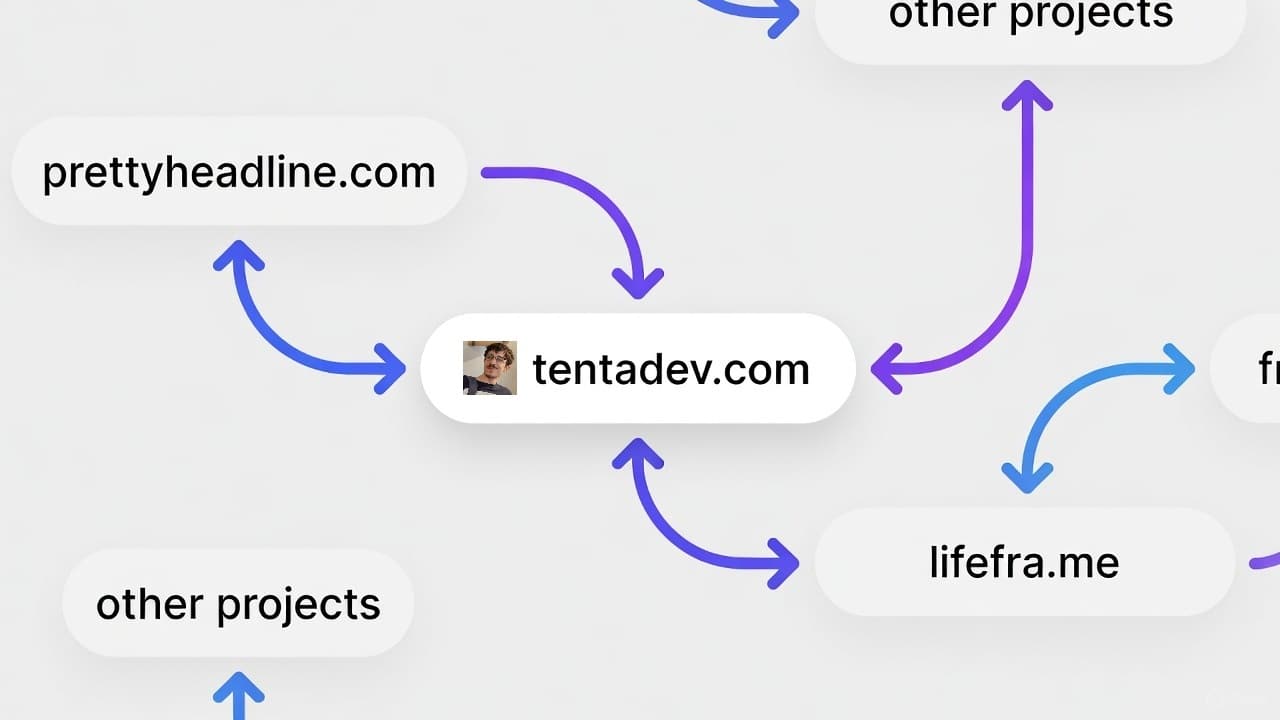
The Portfolio Hub Strategy - Creating a virtuous cycle of backlinks
Here's how it works:
- Your portfolio (tentadev.com) is your main authority domain
- Your projects (prettyheadline.com, lifefra.me) link back to your portfolio
- Your portfolio links to all your projects
As you improve the SEO of each project:
- Their DR increases
- Their backlinks to your portfolio become more valuable
- Your portfolio's DR increases
- Your portfolio's backlinks to your projects become more valuable
- It's a virtuous cycle
Real results from this strategy:
- My portfolio (tentadev.com): DR 29
- prettyheadline.com: DR 14
- lifefra.me: DR 14
All three domains are lifting each other up through strategic cross-linking.
The Compound Effect
When you launch a new project, it immediately benefits from:
- Your portfolio's established DR
- Your other projects' backlinks
- Your existing SEO knowledge and content
Everything is cumulative. The work you do today makes every future project easier to launch.
No Magic Pills: The Reality of SEO
Let me be brutally honest: SEO takes time.
You won't see results in a week. Probably not in a month. But if you:
- Set up programmatic SEO correctly
- Write valuable, relevant content consistently
- Build authentic connections in your niche
- Create a portfolio hub strategy
- Stay patient and consistent
You will see results. I did, and you can too.
My Current Results and What's Next
After 2 months:
- Portfolio DR: 0 → 29
- Project DRs: Both prettyheadline.com and lifefra.me reached DR 14
- Organic traffic growing steadily across all domains
- Real connections with other builders
The portfolio hub strategy is working—all three domains are growing together thanks to the cross-linking approach.
My strategy moving forward:
- Continue writing detailed, valuable blog posts
- Review more tools and projects
- Build and launch more projects
- Create more content about my building journey
Collaboration is Key
I want to emphasize something important: I'm open to collaborations.
If you're building something relevant to development, SEO, or indie hacking, and you think it would be valuable to this audience, let's talk. I'm always looking for:
- Tools to review honestly
- Projects to feature
- Guest post opportunities
- Cross-promotion partnerships
Real connections are what make SEO work in the long run.
Action Steps You Can Take Today
- Set up programmatic SEO - sitemap, robots.txt, proper metadata
- Create your portfolio hub - if you don't have one, make it your next project
- Write your first valuable blog post - review a tool you actually use
- Link your projects - create that virtuous cycle
- Be consistent - commit to the long game
Final Thoughts
SEO isn't rocket science, but it requires patience and consistency. As developers, we have a unique advantage: we can implement technical SEO perfectly and we can build our own network of projects that support each other.
Start today. Build in public. Share your journey. The results will come.
If you found this guide helpful, feel free to link to it from your own blog or project. That's how we all grow together.
Connect with me
Follow my journey building in public, sharing insights about development, and creating products.
Want to connect? I'm always open to discussing SEO strategies, reviewing tools, or collaborating on content. Reach out through my social media or email.